By K Varia
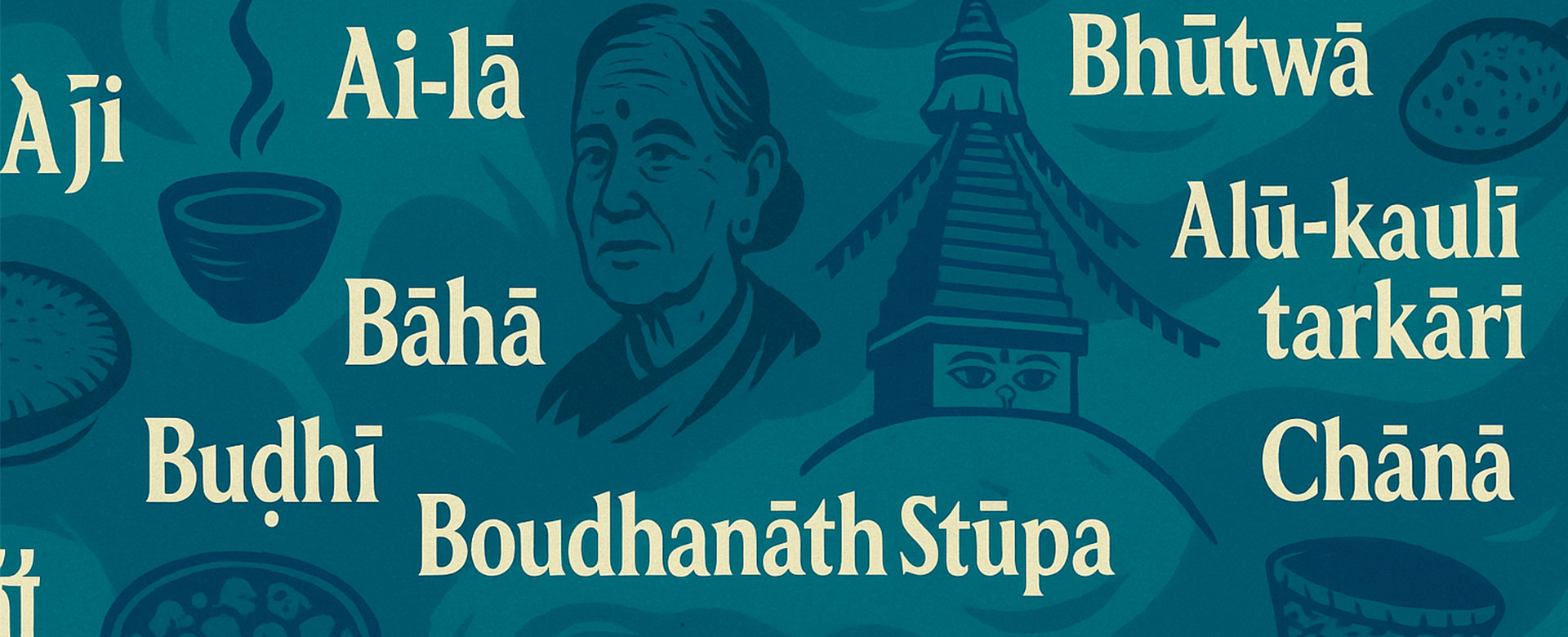
While many readers—especially those familiar with Nepalese culture—will likely recognise these terms, the context in which they appear in the story may give them new depth or resonance.
Is there anything that stands out to you as you read through the list? Perhaps a word that brings back a memory, or one that reveals something unexpected about a character or moment? Feel free to share your thoughts in the comments—we’d love to hear what speaks to you.
• Ājā / Ajī – Another way of saying grandad or grandmother (paternal). Refers to Aman’s grandfather and Nabin/Nadia’s grandmother.
• Ai-lā – A Newar alcoholic rice beverage, similar to rice wine.
• Bāhā – A Newar Buddhist temple.
• Bajrachārya – A Newar Buddhist priestly caste known for ritual and scholarly roles.
• Barā – A Nepalese lentil pancake.
• Bhīn-Īhipā – Auspicious wedding (traditional term).
• Buḍhī – A colloquial Newar or Nepali term for an old woman.
• Bhūtwā – A spicy Nepali dish, which can also be vegetarian.
• Boudhanāth Stūpa – A famous Buddhist stupa in Kathmandu.
• Ālū-kāulī tarkārī – A vegetable curry made with potatoes and cauliflower, cooked with turmeric, cumin, and garlic; commonly eaten with rice or roti.
• Chānā chatpāt – A spicy chickpea snack, often with onion, tomato, and spices.
• Chhōrā – Son in Nepali; sometimes used for someone treated like a son.
• Dōkō – A large conical basket for carrying goods, supported with a head strap.
• Ghī – Clarification: This appears to be a mix-up. “Ghī” typically means clarified butter in Nepali; if you meant martial arts clothes, that’s likely a Japanese term like “gi.”
• Hākū patāsī – A black sari traditionally worn by young Newar girls.
• Guru-jū – A respectful term for a Newar Buddhist teacher or priest.
• Hajurābubā – Paternal grandfather in Nepali. Aman uses it for his grand-uncle, who becomes a surrogate grandfather.
• Kākrō ko achār – Nepali cucumber pickle, flavoured with mustard seeds, lemon juice, and spices.
• Kākā – Paternal uncle.
• Karaī – A wok or deep pan used for frying or cooking.
• Maijū – The wife of one’s maternal uncle. Aman’s wife is maiju to Kaya.
• Maldahā – A mango variety found in Nepal and India.
• Māmā – Maternal uncle (mother’s brother); Aman is Kaya’s māmā.
• Mandala – A spiritual geometric pattern used in Hinduism and Buddhism.
• Mangal – Mars, the planet, in Nepali.
• Maruṇī – A vibrant traditional Nepali folk dance.
• Maṇḍapa – A temporary or permanent ritual pavilion used for weddings or other ceremonies.
• Mōmō – Nepalese dumplings, filled with vegetables in this story.
• Oṃ Maṇi Padme Hūṃ – A sacred Buddhist mantra symbolising compassion and the path to enlightenment.
• Pāgal – Crazy or mad (colloquial).
• Prem bibāha – Love marriage, as opposed to arranged.
• Purī – Deep-fried bread made from wheat flour.
• Resham firirī – A popular Nepali folk song.
• Śaṅkha – A conch shell, used in Buddhist and Hindu rituals.
• Sārī – A traditional South Asian garment worn by women.
• Sel rōṭī – A deep-fried, ring-shaped rice flour bread, often served during festivals.
• Śramaṇic – Related to ascetic traditions in Buddhism and Jainism.
• Sukkha rōṭī – Dry flatbread, made without oil or ghee.
• Tapālan – A Newar ceremonial male attire, worn during rituals or special occasions.
• Tarkārī – A general term for vegetable curry.
• Tawā – A flat griddle used to cook roti, chapatis, or pancakes.
• Ṭōpī – A traditional Nepali cap or headgear.
• Yōmārī – A Newar steamed dumpling filled with molasses or sesame paste, traditionally eaten during festivals.
This is really handy for people who aren’t Nepali, but want to feel included in Aman’s journey.
A really helpful addition for readers. This glossary helps highlight the cultural richness of the book and gives more meaning to the Nepali words and expressions used throughout. Super interesting from a person of Bangladeshi heritage, to notice how South Asian cultures can overlap in such nostalgic ways, like language, food and traditions.